
The Impact of Radiator Fin Quantity on Heat Dissipation
author: Sandy
2024-12-16
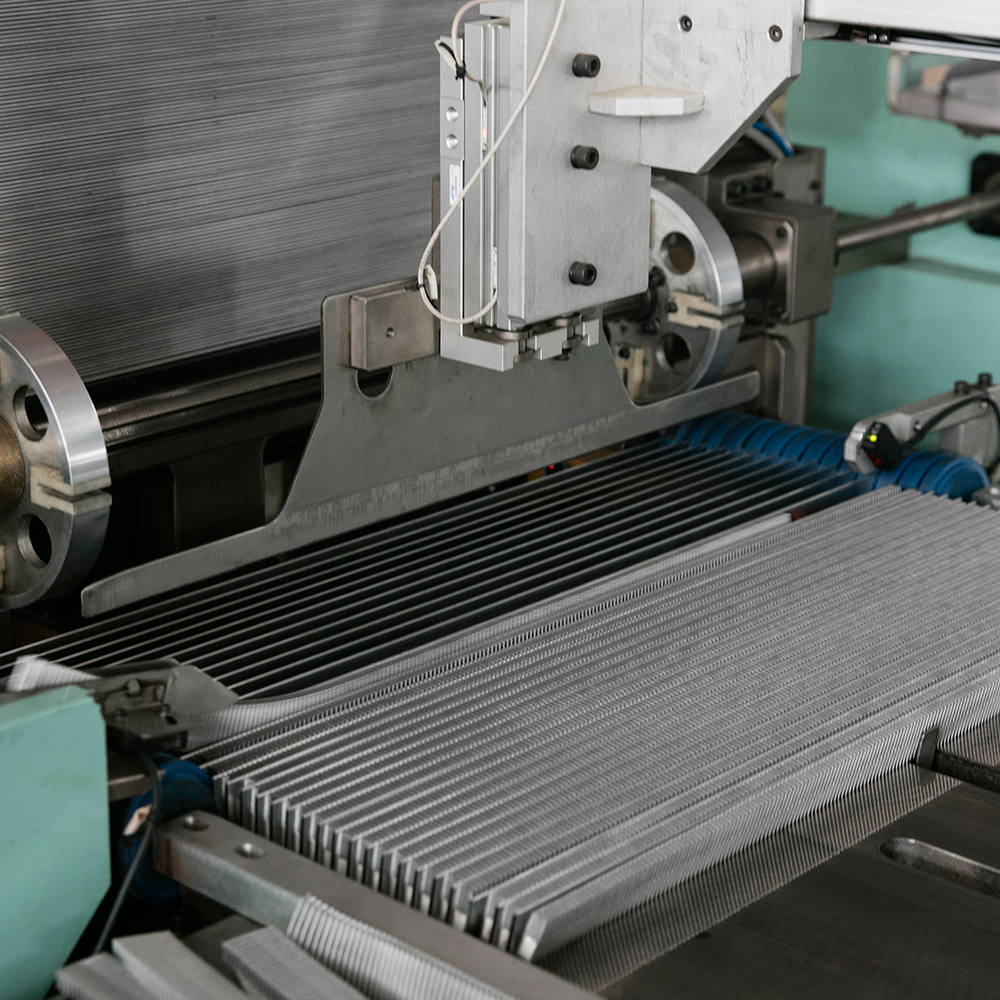
Radiator fins play a crucial role in enhancing the heat transfer efficiency of a radiator. The number of fins directly influences the overall heat dissipation performance, and understanding this relationship is essential for optimizing radiator design.
Increasing the number of fins generally leads to a larger surface area available for heat transfer. As the coolant passes through the radiator tubes, heat is conducted to the fins. With a greater number of fins, there is more surface area in contact with the surrounding air, facilitating a more efficient transfer of heat from the fins to the air. This is based on the principle of convection, where the heated fins cause the adjacent air to warm up and rise, being replaced by cooler air, thus continuously carrying away heat.
However, there is a limit to the beneficial effect of adding more fins. As the fin density becomes too high, the air flow between the fins may become restricted. This can lead to an increase in air pressure drop across the radiator. The reduced air flow rate due to the higher pressure drop can counteract the advantage gained from the increased surface area. In extreme cases, it may even result in a decrease in overall heat dissipation if the reduction in air flow is significant enough.
Moreover, the manufacturing process and cost are also affected by the fin quantity. More fins require more material and more precise manufacturing techniques to ensure proper spacing and alignment. This can increase the production cost and complexity.
Therefore, when designing a radiator, engineers need to strike a balance between the number of fins and other factors such as air flow rate, coolant flow rate, and cost. By carefully considering these aspects and conducting thermal simulations and real-world tests, an optimal fin quantity can be determined to achieve the best heat dissipation performance for a given application, whether it is in automotive cooling systems, HVAC systems, or industrial heat exchangers.
Increasing the number of fins generally leads to a larger surface area available for heat transfer. As the coolant passes through the radiator tubes, heat is conducted to the fins. With a greater number of fins, there is more surface area in contact with the surrounding air, facilitating a more efficient transfer of heat from the fins to the air. This is based on the principle of convection, where the heated fins cause the adjacent air to warm up and rise, being replaced by cooler air, thus continuously carrying away heat.
However, there is a limit to the beneficial effect of adding more fins. As the fin density becomes too high, the air flow between the fins may become restricted. This can lead to an increase in air pressure drop across the radiator. The reduced air flow rate due to the higher pressure drop can counteract the advantage gained from the increased surface area. In extreme cases, it may even result in a decrease in overall heat dissipation if the reduction in air flow is significant enough.
Moreover, the manufacturing process and cost are also affected by the fin quantity. More fins require more material and more precise manufacturing techniques to ensure proper spacing and alignment. This can increase the production cost and complexity.
Therefore, when designing a radiator, engineers need to strike a balance between the number of fins and other factors such as air flow rate, coolant flow rate, and cost. By carefully considering these aspects and conducting thermal simulations and real-world tests, an optimal fin quantity can be determined to achieve the best heat dissipation performance for a given application, whether it is in automotive cooling systems, HVAC systems, or industrial heat exchangers.
In addition to the number of fins, several other factors can affect the heat dissipation performance of a radiator:
1. Fin Material
Thermal Conductivity: Different fin materials possess varying thermal conductivities. For instance, copper has a thermal conductivity of approximately 385 - 401 W/(m·K), while aluminum has a thermal conductivity of about 205 - 237 W/(m·K). Materials with high thermal conductivity can transfer heat from the heat source to the fin surface more rapidly. When copper fins are used, heat can be more efficiently transferred from the base of the radiator (the part in contact with the heat source) to the fins and then dissipated into the surrounding air. Compared to aluminum fins, under the same conditions, it can reduce the temperature of the heat source more quickly.
Material Density and Specific Heat Capacity: The density and specific heat capacity of the material also impact heat dissipation. Materials with a higher density experience a relatively smaller temperature increase when absorbing the same amount of heat, and those with a large specific heat capacity can absorb more heat with a smaller temperature change. For example, when a radiator is subjected to periodic thermal load impacts, a material with a large specific heat capacity can better buffer temperature changes, resulting in a more stable heat dissipation process.
2. Air Velocity
Forced Convection and Natural Convection: Natural convection occurs due to the temperature difference-induced air movement. When the fin temperature of the radiator is higher than that of the surrounding air, the air near the fins heats up and rises, and the surrounding cooler air replaces it, forming natural convection. However, the air velocity of natural convection is relatively low, and the efficiency of heat removal is limited.
**Forced convection is achieved by using devices such as fans to make air flow rapidly through the radiator. For example, in a computer CPU radiator, the higher the fan speed, the greater the air velocity. A higher air velocity can carry away the heat on the fin surface more quickly, significantly improving the heat dissipation efficiency. Experiments show that within a certain range, the air velocity is approximately linearly related to the heat dissipation power. When the air velocity increases from 1 m/s to 3 m/s, the heat dissipation power of the radiator may increase several times.
Air Flow Direction: The relative relationship between the air flow direction and the fins is also crucial. If the air can flow perpendicular to the fins, compared to flowing parallel to the fins, it can more effectively carry away heat. This is because perpendicular flow allows the air to better contact the entire surface of the fins, reducing the thickness of the thermal boundary layer and thus enhancing the heat exchange efficiency.
3. Size and Shape of the Radiator
Heat Dissipation Area: In addition to the number of fins affecting the heat dissipation area, the overall size of the radiator is also critical. A larger radiator base can better cover the heat source and improve the efficiency of heat conduction. For example, in the cooling system of large industrial equipment, a larger radiator base can closely fit the heating equipment to ensure that heat can be effectively transferred from the equipment to the radiator.
Shape of the Radiator: The shape of the radiator also affects heat dissipation. A radiator with a complex shape, such as fins with bends, waves, or other structures, may increase the degree of turbulence in the air flow. Appropriate turbulence can enhance heat exchange because it can disrupt the thermal boundary layer and enable more sufficient heat exchange between the air and the fin surface.
Channel Design: For some radiators with coolant channels, the design of the channels affects the flow of the coolant and heat exchange. Factors such as the diameter, length, and degree of curvature of the channels all affect the flow velocity of the coolant and its contact time with the radiator wall. A narrower channel can accelerate the flow velocity of the coolant but may increase the flow resistance; while an appropriate bend can increase the contact area between the coolant and the wall, improving the heat exchange efficiency.
4. Coolant (if applicable)
Coolant Type: Different coolants have different thermophysical properties. For example, water has a relatively large specific heat capacity and is a commonly used coolant. Some special coolants, such as antifreeze containing ethylene glycol, not only have good antifreeze performance but also affect the heat dissipation effect due to properties such as thermal conductivity. In a low-temperature environment, using an appropriate antifreeze can prevent the coolant from freezing while ensuring a certain heat dissipation efficiency.
Coolant Flow Velocity: The flow velocity of the coolant in the radiator is also important. A higher flow velocity can carry away heat from the heat
1. Fin Material
Thermal Conductivity: Different fin materials possess varying thermal conductivities. For instance, copper has a thermal conductivity of approximately 385 - 401 W/(m·K), while aluminum has a thermal conductivity of about 205 - 237 W/(m·K). Materials with high thermal conductivity can transfer heat from the heat source to the fin surface more rapidly. When copper fins are used, heat can be more efficiently transferred from the base of the radiator (the part in contact with the heat source) to the fins and then dissipated into the surrounding air. Compared to aluminum fins, under the same conditions, it can reduce the temperature of the heat source more quickly.
Material Density and Specific Heat Capacity: The density and specific heat capacity of the material also impact heat dissipation. Materials with a higher density experience a relatively smaller temperature increase when absorbing the same amount of heat, and those with a large specific heat capacity can absorb more heat with a smaller temperature change. For example, when a radiator is subjected to periodic thermal load impacts, a material with a large specific heat capacity can better buffer temperature changes, resulting in a more stable heat dissipation process.
2. Air Velocity
Forced Convection and Natural Convection: Natural convection occurs due to the temperature difference-induced air movement. When the fin temperature of the radiator is higher than that of the surrounding air, the air near the fins heats up and rises, and the surrounding cooler air replaces it, forming natural convection. However, the air velocity of natural convection is relatively low, and the efficiency of heat removal is limited.
**Forced convection is achieved by using devices such as fans to make air flow rapidly through the radiator. For example, in a computer CPU radiator, the higher the fan speed, the greater the air velocity. A higher air velocity can carry away the heat on the fin surface more quickly, significantly improving the heat dissipation efficiency. Experiments show that within a certain range, the air velocity is approximately linearly related to the heat dissipation power. When the air velocity increases from 1 m/s to 3 m/s, the heat dissipation power of the radiator may increase several times.
Air Flow Direction: The relative relationship between the air flow direction and the fins is also crucial. If the air can flow perpendicular to the fins, compared to flowing parallel to the fins, it can more effectively carry away heat. This is because perpendicular flow allows the air to better contact the entire surface of the fins, reducing the thickness of the thermal boundary layer and thus enhancing the heat exchange efficiency.
3. Size and Shape of the Radiator
Heat Dissipation Area: In addition to the number of fins affecting the heat dissipation area, the overall size of the radiator is also critical. A larger radiator base can better cover the heat source and improve the efficiency of heat conduction. For example, in the cooling system of large industrial equipment, a larger radiator base can closely fit the heating equipment to ensure that heat can be effectively transferred from the equipment to the radiator.
Shape of the Radiator: The shape of the radiator also affects heat dissipation. A radiator with a complex shape, such as fins with bends, waves, or other structures, may increase the degree of turbulence in the air flow. Appropriate turbulence can enhance heat exchange because it can disrupt the thermal boundary layer and enable more sufficient heat exchange between the air and the fin surface.
Channel Design: For some radiators with coolant channels, the design of the channels affects the flow of the coolant and heat exchange. Factors such as the diameter, length, and degree of curvature of the channels all affect the flow velocity of the coolant and its contact time with the radiator wall. A narrower channel can accelerate the flow velocity of the coolant but may increase the flow resistance; while an appropriate bend can increase the contact area between the coolant and the wall, improving the heat exchange efficiency.
4. Coolant (if applicable)
Coolant Type: Different coolants have different thermophysical properties. For example, water has a relatively large specific heat capacity and is a commonly used coolant. Some special coolants, such as antifreeze containing ethylene glycol, not only have good antifreeze performance but also affect the heat dissipation effect due to properties such as thermal conductivity. In a low-temperature environment, using an appropriate antifreeze can prevent the coolant from freezing while ensuring a certain heat dissipation efficiency.
Coolant Flow Velocity: The flow velocity of the coolant in the radiator is also important. A higher flow velocity can carry away heat from the heat
The Vital Role of Heavy Truck Radiators in Efficient Transportation
Unveiling the Superior Pressure Resistance Standards of Truck Radiators