
Truck Radiator: The Invisible Guardian of the Engine

Introduction: The "Cool Guardian" of Trucks
In high - temperature driving, a truck's engine risks overheating without proper cooling. The radiator, a core part of the cooling system, is crucial. Malfunctions can lead to sharp engine temperature rises, component damage, performance degradation, shorter lifespan, and safety hazards. Understanding its heat - dissipation principle is essential for truck operation.
Structural Analysis of the Truck Radiator
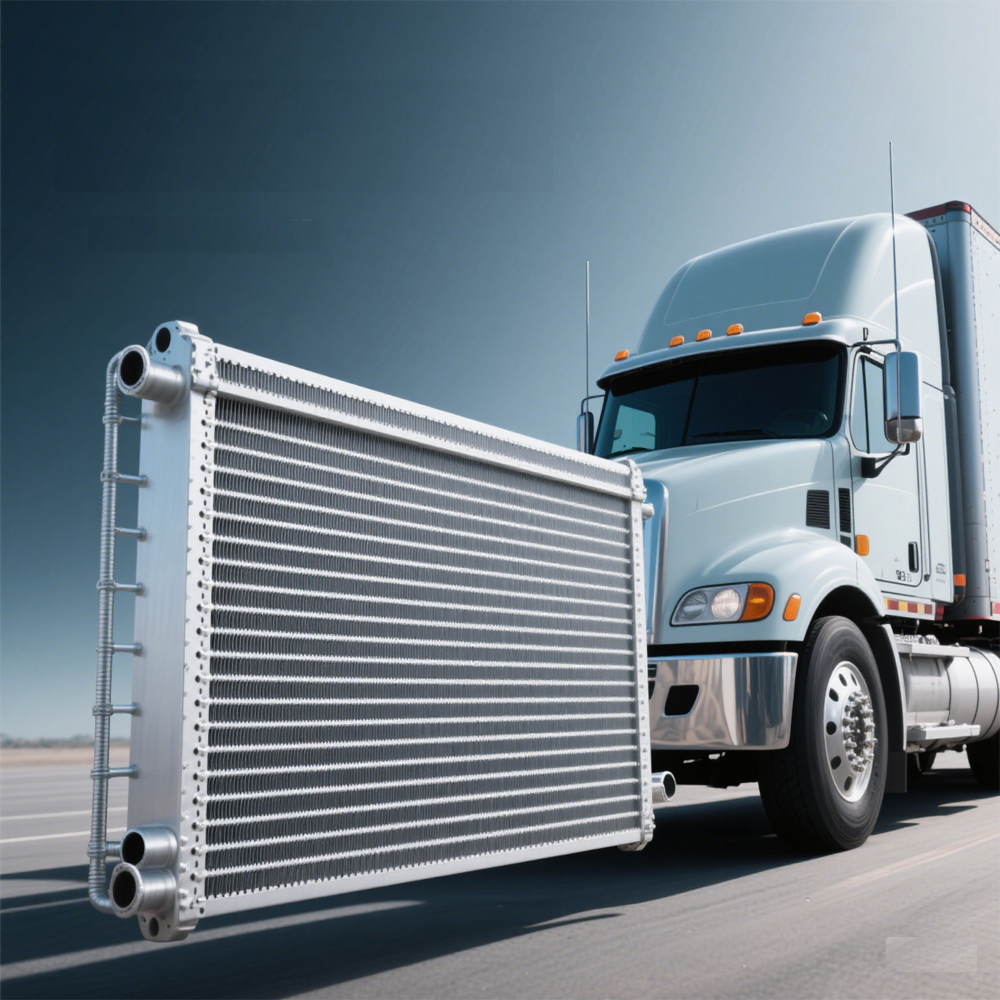
The truck radiator consists of the inlet water chamber, outlet water chamber, main board, and radiator core.
- Inlet Water Chamber: It receives hot coolant from the engine, buffers, and distributes it evenly.
- Outlet Water Chamber: Collects cooled coolant and returns it to the engine.
- Main Board: Offers structural support for the radiator.
- Radiator Core: Comprising heat - dissipation pipes and fins, it's the key for heat exchange, with different types having unique structures and heat - dissipation features.
The Mystery of Heat Exchange: A Detailed Explanation of the Heat Dissipation Principle
(I) The Basics of the Water Cooling System
The water - cooling system includes a water pump, radiator, cooling fan, and thermostat.
- Water Pump: Supplies power for coolant circulation.
- Radiator: Disperses coolant heat.
- Cooling Fan: Accelerates air - coolant heat exchange.
- Thermostat: Adjusts coolant circulation paths based on temperature. Coolant cycles from the engine's water jacket to the radiator and back, constantly dissipating engine heat.
(II) The Heat Exchange Process
Hot coolant in the radiator core transfers heat to fins through pipes. Air flowing over the fins absorbs and removes the heat, cooling the coolant. Some radiator cores use corrugated fins for more air - fin contact or louver holes to guide air, enhancing heat exchange. Microscopically, it's a molecular energy - transfer process from hot coolant to air.
Influencing Factors of Heat Dissipation Efficiency
(I) The Power of Materials
Common radiator materials are aluminum and copper.
- Copper: Has high thermal conductivity but is heavy, costly, and less corrosion - resistant.
- Aluminum: Offers good heat - dissipation, is lightweight and cost - effective. Surface treatment can boost corrosion resistance, though its high - temperature oxidation resistance is weak.
(II) The Wisdom of Structural Design
Fin and cooling - pipe designs impact heat - dissipation efficiency.
- Fin Design: Fin number, shape (like wavy or serrated), spacing, and height are carefully set. These shapes increase air - fin contact and disrupt air flow for better heat transfer.
- Cooling - Pipe Shape: Flat - circular cross - section pipes increase coolant contact and reduce air resistance, improving coolant flow and heat - dissipation. Radiator layouts, like vertical or horizontal flow, suit different vehicle models and working conditions.
Collaborative Work: Cooperation with Other Heat Dissipation Components
The radiator works with the thermostat, water pump, and cooling fan.
- Thermostat: Controls coolant circulation paths according to temperature.
- Water Pump: Powers coolant circulation.
- Cooling Fan: Increases air - coolant heat exchange when the engine gets hot. Their combined operation ensures the engine runs at the right temperature.
Maintenance and Upkeep: The Secret to Extending the Life of the Radiator
Regular maintenance is crucial:
- Check Coolant: Monitor coolant level and quality. Replace deteriorated coolant.
- Clean Radiator: Remove surface debris using a high - pressure water gun or compressed air.
- Avoid Inferior Coolant: It can damage the radiator. Use recommended coolant.
Conclusion: The Radiator, the "Temperature Control Master" of Trucks
The radiator, with its well - designed structure and efficient heat - dissipation, safeguards truck operation. Material selection, structure design, component cooperation, and maintenance all matter. Truckers should value the radiator and maintain it properly for optimal performance and safe driving.
Unleash peak truck performance with our top - tier radiators! Engineered for efficiency, they ensure cool operations, safeguard brakes, and cut fuel costs. Click [link] to upgrade now!
Truck Radiator: Unveiling the Secrets Behind Efficient Heat Dissipation


