
Auto aluminum brazing cooling radiator Core Assembly
author: Sandy
2024-12-05
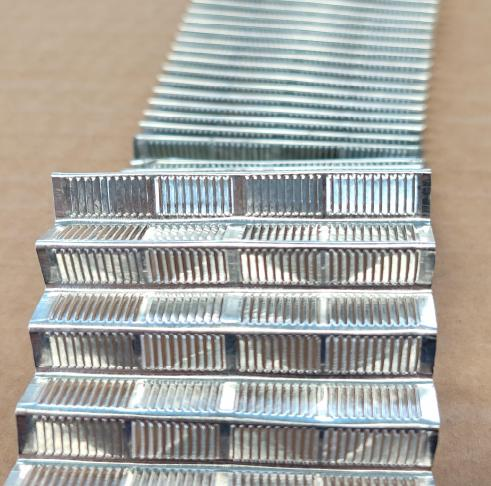
- Core Assembly
The core of the radiator is the central part responsible for heat transfer. It mainly consists of radiator tubes and fins.
-
Radiator Tube and Fin Assembly: The radiator tubes are first inserted into the pre - made fin structures. The fins usually have precisely - drilled holes to ensure a snug fit for the tubes. This insertion process requires careful handling to avoid any damage to the tubes or fins. In some cases, a small amount of mechanical assistance might be used to ensure the tubes are fully inserted into the correct positions within the fins. Once inserted, the combination of tubes and fins forms the basic framework of the core.
-
Tube - expanding Process: After the tubes are inserted into the fins, a tube - expanding process is often carried out. This is to ensure a tight connection between the tubes and fins. The tube - expanding equipment applies a controlled amount of pressure to the inside of the tubes, causing them to expand slightly and press firmly against the fins. This not only enhances the thermal contact between the two components but also provides mechanical stability to the core structure.
-
Core Welding and Sealing: For some radiator designs, welding may be used to further secure the connection between the tubes and fins. Brazing, as mentioned earlier, is a common welding method. The welded core is then carefully inspected for any potential leaks or weak points. Sealing is of utmost importance as any leakage in the core can significantly affect the radiator's performance.
- Tank and Core Connection
The upper and lower tanks play a crucial role in holding and circulating the coolant.
-
Tank Preparation: The tanks are usually made of plastic through injection - molding processes. Before connecting to the core, the tanks are inspected for any manufacturing defects such as cracks, holes, or irregularities in the inlet and outlet ports. The quality of the injection - molding process directly affects the tank's integrity and functionality.
-
Connection Procedure: The core is then attached to the tanks. This is typically done using sealing gaskets and bolts. The sealing gaskets are placed between the core and the tank to ensure a watertight connection. The bolts are tightened to a specific torque to hold the components together firmly. Care must be taken during this process to ensure that the gaskets are properly positioned and not damaged, as any misalignment or damage to the gasket can lead to coolant leakage.
- Accessory Installation
-
Fan Installation: The radiator fan is an essential component that helps in enhancing the heat dissipation process. The fan is mounted in a position relative to the core such that it can effectively draw air through the fins. The installation requires precise alignment to ensure the fan blades have the correct clearance from the surrounding structures. The fan is usually attached using screws or clips, and the electrical connections are made according to the vehicle's wiring system to ensure proper operation.
-
Temperature Sensor Installation: A temperature sensor is installed to monitor the coolant temperature. It is placed in a location where it can accurately sense the temperature of the coolant, usually near the inlet or outlet of the radiator or in the coolant passages of the tank. The sensor is carefully inserted and secured to provide reliable temperature readings, which are crucial for the vehicle's thermal management system.
-
Fan Shroud Installation: The fan shroud is installed to direct the airflow from the fan over the radiator core. It is designed to optimize the air circulation and ensure that the air passes through the fins in the most efficient manner. The shroud is attached around the fan and the radiator core, usually using clips or screws, and its position is adjusted to ensure a proper fit and effective air - guiding function.
- Final Assembly Checks
After the radiator is fully assembled, a series of checks are carried out.
-
Visual Inspection: The entire radiator assembly is visually inspected for any signs of damage, such as scratches, dents, or misaligned components. This includes checking the connections between the core and tanks, the fan and its shroud, and the temperature sensor to ensure everything is in the correct position and free from physical damage.
-
Leak Testing: A leak test is a critical step to ensure the integrity of the radiator. The radiator is filled with a test fluid (usually water or a special leak - detection fluid) and pressurized to a specific level. The system is then monitored for any signs of leakage, such as drops of fluid or a decrease in pressure over a set period of time. Any detected leaks must be addressed before the radiator is considered ready for installation in the vehicle.
-
Functionality Testing: The fan is tested to ensure it spins freely and at the correct speed. The temperature sensor's functionality is also verified to ensure it provides accurate temperature readings. This may involve using diagnostic equipment to check the electrical signals and responses of these components to ensure they work as intended in the overall radiator system.
User Manual for Truck Radiator
Differences between Roll - Forming and Clinching for Truck Radiator Tanks