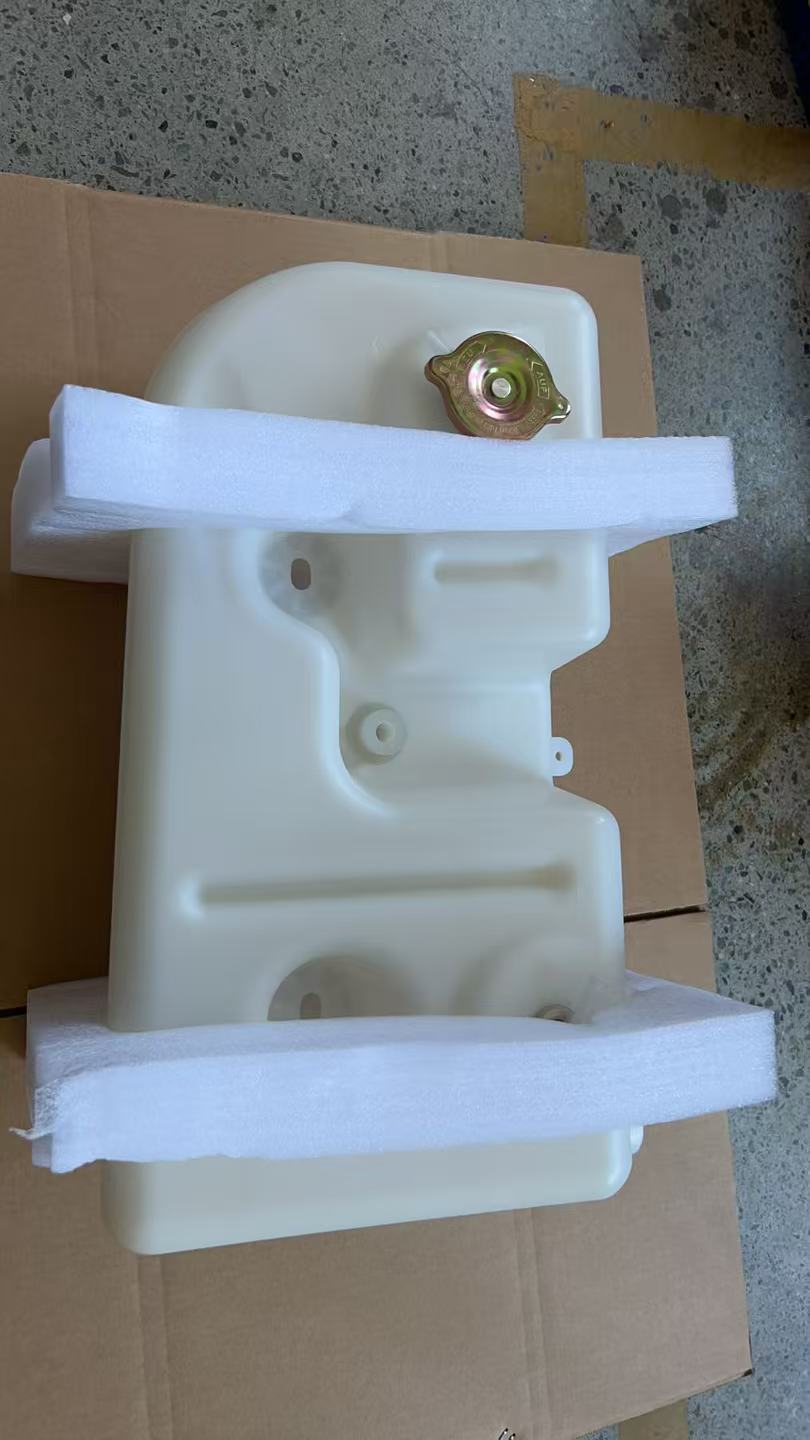
Unveiling the Mystery of the Coolant Overflow Tank

In the large and complex cooling system of a car, the coolant overflow tank is like a low-key unsung hero, quietly hidden in a corner of the engine bay. It is small in size and simple in structure, often overlooked by most car owners, yet it actually bears the crucial responsibility of ensuring the stable operation of the car’s cooling system. Just like a defensive midfielder in a football team—though not as eye-catching as a striker, it silently maintains the stable operation of the entire team. Once missing, the whole system may fall into chaos.
Imagine on a scorching summer day, the car engine runs continuously at high intensity, generating a large amount of heat. At this time, the cooling system acts like a hardworking firefighter, working at full capacity to control the engine’s temperature. The overflow tank, meanwhile, is the key piece of equipment in the firefighter’s hands: when the coolant expands due to rising temperatures, it can promptly hold the excess coolant, preventing the cooling system from malfunctioning due to excessive pressure and ensuring the engine always stays within a safe operating temperature range.
A Deep Dive into How the Overflow Tank Works
How the Overflow Tank Impacts Your Car’s Performance
Keeping the Engine Running Stable
The engine is comparable to the "heart" of a car, and the overflow tank is a key guarantee to ensure this "heart" beats steadily. When the engine is running, various internal mechanical components rub at high speed, generating massive heat. If this heat cannot be dissipated in a timely manner, the engine’s temperature will keep rising, leading to a series of serious problems. For instance, excessively high temperatures may cause uneven thermal expansion of engine parts, reducing the fit accuracy between components and accelerating wear. In severe cases, it could even result in failures like engine cylinder scuffing or bearing seizure, rendering the engine completely inoperable.
The presence of the overflow tank effectively prevents such situations. By working in synergy with other components of the cooling system, it promptly stores excess coolant when the coolant expands due to heat, stabilizing the pressure of the cooling system. At the same time, when the engine temperature drops, it can timely return the stored coolant to the cooling system, ensuring the coolant always maintains an appropriate level and keeping the engine at a normal operating temperature. It is similar to the sweat glands in the human body: when body temperature rises, sweat is secreted, and heat is dissipated through the evaporation of sweat, thereby maintaining stable body temperature. For the engine, the overflow tank is just such an indispensable temperature-regulating device, ensuring the engine runs stably under all working conditions.
Boosting Overall Vehicle Reliability
Beyond directly protecting the engine, the overflow tank also plays an important role in enhancing the overall reliability of the vehicle. A stable cooling system is the foundation for the normal operation of all car components, and as a key part of the cooling system, the normal operation of the overflow tank can reduce the risk of various failures caused by cooling issues.
In daily car use, if the overflow tank malfunctions—such as coolant leakage due to poor sealing, or failure to properly regulate coolant level and pressure due to internal structural damage—the performance of the cooling system may decline. This not only affects the engine’s performance but may also trigger a chain reaction on other components. For example, high temperatures may cause transmission fluid to deteriorate, affecting the smoothness of gear shifts and the service life of the transmission; it may also cause electronic components to overheat, triggering circuit faults and disrupting the normal operation of the vehicle’s electronic control system.
On the contrary, a well-functioning overflow tank can ensure the cooling system remains in optimal working condition, reducing the probability of vehicle breakdowns during driving. This not only cuts down on the owner’s maintenance costs and time but also enhances the safety and reliability of the vehicle, allowing the owner to drive with greater peace of mind. It can be said that although the overflow tank is small, it is like a cornerstone of the vehicle’s reliability framework, silently supporting the stable operation of the car and safeguarding our travels.
Common Faults and Solutions
Antifreeze Leakage
In daily car use, many car owners may encounter the problem of antifreeze leaking from the overflow tank. This is not only troublesome but may also indicate an issue with the car’s cooling system. There are multiple reasons for this phenomenon.
First, one of the most common causes is overfilling the antifreeze. When adding antifreeze, if you do not carefully check the scale lines on the overflow tank and add more than the maximum limit, the antifreeze will expand as the engine temperature rises during driving, and the excess will leak out of the overflow tank. It is similar to pouring water into a cup—if you fill it too full, the water will spill out when the cup is slightly shaken. The solution to this problem is relatively simple: use a syringe or a dedicated extraction tool to carefully draw out the excess antifreeze from the overflow tank, bringing the level back to the normal range. During extraction, pay attention to standardizing your operations to prevent antifreeze from splashing onto your body.
Second, a faulty thermostat may also cause antifreeze leakage. The thermostat is a key component in the car’s cooling system; it acts like an intelligent valve that adjusts the circulation path of the coolant based on the engine’s water temperature. When the engine water temperature is low, the thermostat closes, and the coolant circulates in a small loop—flowing mainly inside the engine to quickly raise the engine’s temperature. When the water temperature rises to a certain level, the thermostat opens, and the coolant enters a large loop, dissipating heat through the radiator to maintain the engine’s normal operating temperature. Once the thermostat malfunctions and fails to open properly, the coolant can only circulate in the small loop and cannot effectively dissipate heat through the radiator. This causes the engine water temperature to rise sharply, the antifreeze to expand due to heat, and eventually leak out of the overflow tank. In such cases, it is necessary to promptly take the vehicle to a professional repair shop, where technicians will inspect and replace the thermostat.
Additionally, a damaged overflow tank cap is another non-negligible cause of antifreeze leakage. The main function of the overflow tank cap is to seal the tank, prevent coolant leakage, and maintain pressure balance inside the tank. If the cap is cracked, deformed, or not sealed properly, the pressure inside the tank cannot be effectively controlled when the engine bay temperature rises, and the antifreeze will leak out through the gaps in the cap. During daily inspections, carefully check the overflow tank cap for signs of damage; if any issues are found, replace it with a new one promptly to ensure the normal operation of the cooling system.
Abnormal Level Changes
Besides antifreeze leakage, abnormal changes in the overflow tank level also require attention. A sudden drop or rise in the level may indicate a potential fault in the cooling system.
When you notice the overflow tank level dropping for no reason, first check if there are any leak points in the cooling system. Components such as the cooling pipes, radiator, and water pump may develop leaks. For example, cooling pipes, which are in a high-temperature and vibrating environment for a long time, may age and crack, causing coolant leakage; the radiator may develop holes due to external impact or internal corrosion, leading to coolant loss. You can check for coolant traces on various components of the cooling system to determine if there is a leak. If a minor leak point is found, a dedicated pipe repair agent can be used for repair; however, if important components like the radiator or water pump are leaking, it is recommended to take the vehicle to a professional repair shop for maintenance or replacement promptly. Additionally, internal burnout of the engine may also cause the coolant level to drop. For example, if the engine cylinder head gasket is damaged, coolant may enter the engine combustion chamber and be burned off—this situation is relatively complex and requires inspection by professional maintenance personnel.
An unexplained rise in the level should also not be ignored. This may occur when gas from inside the engine enters the cooling system, squeezing the coolant into the overflow tank and raising the level. A common cause is a damaged cylinder head gasket, which allows high-pressure gas from the cylinders to escape into the cooling system. Additionally, if the pressure regulating device in the cooling system malfunctions and fails to regulate the system pressure properly, it may also cause an abnormal rise in the level. In such cases, a comprehensive inspection of the engine and cooling system is required to identify the cause of the fault and repair it promptly.
In short, whether it is antifreeze leakage or abnormal level changes, these seemingly simple problems may hide potential faults in the cooling system. As a car owner, you should develop the habit of regularly inspecting the overflow tank level and the cooling system. Once a problem is found, take effective solutions promptly to ensure the normal operation of the car’s cooling system and safeguard the safety of the vehicle during driving.
How to Choose a High-Quality Overflow Tank
Material Considerations
When selecting an overflow tank, material is the primary factor to consider, as it directly affects the tank’s performance, durability, and service life. Currently, the common materials used for overflow tanks on the market are mainly metal and plastic. Each has its own advantages and disadvantages, and car owners need to make a choice based on their own needs.
Metal overflow tanks, such as those made of aluminum alloy, offer excellent strength and high-temperature resistance. In high-temperature environments, they are not easily deformed and can withstand relatively high pressure, providing stable and reliable protection for the cooling system. At the same time, metal materials also have relatively good corrosion resistance, which can effectively resist erosion by coolant and extend the service life of the overflow tank. However, metal overflow tanks also have some drawbacks: they are relatively heavy, which not only increases the overall weight of the vehicle but may also affect the vehicle’s handling performance. Additionally, the manufacturing cost of metal materials is relatively high, making metal overflow tanks generally more expensive than plastic ones—a factor that may need to be considered by car owners with limited budgets.
Plastic overflow tanks are favored by many car owners due to their lightweight and low-cost advantages. Plastic materials are light, which can reduce the vehicle’s load and improve fuel efficiency. Moreover, plastic overflow tanks are relatively affordable, making them more in line with the consumption budgets of most car owners. Additionally, the molding process for plastic overflow tanks is relatively simple, allowing them to be made into various shapes and sizes to better meet the installation needs of different vehicle models. However, plastic overflow tanks are relatively weaker in terms of high-temperature resistance and strength. In long-term high-temperature environments, plastic may age and deform, affecting its normal use. At the same time, plastic is not as corrosion-resistant as metal; if the coolant is highly corrosive, it may damage the plastic overflow tank.
Therefore, when choosing the material of the overflow tank: if you often drive in high-temperature, harsh environments, or have high requirements for the durability and stability of the overflow tank, a metal overflow tank may be more suitable for you; if you value vehicle lightweighting and cost control more, and the vehicle usage environment is relatively mild, a plastic overflow tank is a good choice.
Compatibility Key Points
Choosing an overflow tank compatible with your vehicle model is crucial—just like selecting the right pair of shoes for your feet, only the right one can provide comfort and safety. The design and specifications of cooling systems vary across different vehicle models, and the shape, size, interface, and installation position of the overflow tank are all different. If you choose an incompatible overflow tank, problems such as inability to install, insecure installation, or incompatibility with other components of the cooling system may occur, thereby affecting the normal operation of the cooling system.
To select a compatible overflow tank, you can first refer to the vehicle’s user manual. The manual usually clearly marks the specifications and model of the overflow tank required for the vehicle; choosing according to the information in the manual can ensure the selected overflow tank is perfectly compatible with the vehicle. Second, if you are unsure about the specific model, you can also consult the car dealer or professional automotive maintenance personnel. They have rich experience and professional knowledge and can provide accurate suggestions based on your vehicle model. Additionally, when purchasing an overflow tank, carefully observe its appearance and interface, and compare it with the original overflow tank of the vehicle to ensure they are consistent in shape, size, and interface type.
For example, a small car of a certain brand has a relatively compact cooling system space, which imposes strict requirements on the size of the overflow tank. If the owner randomly chooses an oversized overflow tank, it may not fit into the designated position; if an undersized overflow tank is chosen, it may fail to meet the coolant storage needs, leading to cooling system failure. Therefore, only by selecting an overflow tank that is accurately compatible with the vehicle model can the normal operation of the cooling system be ensured, providing strong support for the stable performance of the vehicle.
Daily Maintenance Tips
To ensure the overflow tank always remains in optimal working condition and safeguard the stable operation of the car’s cooling system, car owners can take the following simple yet effective maintenance measures in daily vehicle use.
Regularly checking the overflow tank level is essential. Before each long-distance drive, or at least once a month, open the engine bay and locate the overflow tank. The overflow tank is usually transparent, with scale lines marked "MAX" (maximum level) and "MIN" (minimum level). Under normal circumstances, the coolant level should be between these two scale lines. If the level is below the "MIN" line, it indicates insufficient coolant, which needs to be added promptly. When adding, use the same brand and model of coolant as the original one in the vehicle to avoid chemical reactions that may occur when different coolants are mixed. Pour the coolant slowly to prevent overflow, and at the same time, observe the level change to bring it to the appropriate position.
In addition to the level, checking the appearance of the overflow tank also cannot be ignored. Carefully inspect whether the tank’s outer shell has cracks, deformation, or damage. If cracks are found on the shell—even very small ones—it may cause coolant leakage, and the overflow tank needs to be replaced promptly. At the same time, check whether the overflow tank cap is sealed properly and whether it is damaged or missing. If the cap is not sealed tightly, it will not only cause the coolant to evaporate easily but may also allow dust and impurities to enter the cooling system, affecting its normal operation.
Furthermore, regularly replacing the antifreeze is also an important part of maintaining the overflow tank and cooling system. Antifreeze has multiple functions such as antifreeze, anti-boiling, and anti-corrosion, but its performance will gradually decline with prolonged use. Generally speaking, the antifreeze replacement cycle for most vehicles is 2–3 years or 40,000–60,000 kilometers; specific details can be found in the vehicle’s user manual. When replacing the antifreeze, first drain the old antifreeze completely, then use a dedicated cleaner to flush the cooling system to ensure no residual impurities or old fluid remain in the system. After flushing, add new antifreeze and fill it to the specified level standard.
During daily driving, also pay attention to the vehicle’s water temperature gauge. If the water temperature gauge shows abnormalities—such as excessively high water temperature or large fluctuations—it may be a sign of a problem with the cooling system, which may also involve a fault in the overflow tank. In such cases, stop the vehicle immediately for inspection to avoid continuing to drive and causing engine damage.
In short, the daily maintenance of the car’s overflow tank is not complicated. It only requires car owners to develop the habit of regular inspection, pay attention to level and appearance changes, and replace the antifreeze on time. This way, potential problems can be detected in a timely manner, ensuring the normal operation of the overflow tank and cooling system, keeping your car in good condition at all times, and providing reliable protection for your travels.
Conclusion: Don’t Overlook the Overflow Tank
The car’s coolant overflow tank—this seemingly insignificant small component—plays a pivotal role in the car’s cooling system. It is the guardian of the engine’s stable operation, the solid guarantee of the vehicle’s overall reliability, and the invisible protector of our safe travels.
From ensuring the stable operation of the engine to enhancing the overall reliability of the vehicle, and from timely warning of potential problems in the cooling system to every function of the overflow tank—it is closely related to the vehicle’s performance and safety. Once the overflow tank malfunctions, even a small issue like poor sealing or abnormal level may trigger a chain reaction, leading to engine overheating, vehicle failure, or even endangering driving safety.
Therefore, as a car owner, we must not overlook the existence of the overflow tank. In daily vehicle use, develop the good habit of regularly inspecting the overflow tank’s level and appearance, and promptly identify and resolve potential problems. At the same time, when choosing an overflow tank, focus on material and compatibility to ensure its reliable quality and stable performance. Additionally, replacing the antifreeze according to the specified cycle is also the key to maintaining the normal operation of the overflow tank and cooling system.
Let us start now to pay attention to the maintenance of the car’s overflow tank and give this silently contributing small component the attention it deserves. Only when it remains in good working condition can our car run unimpeded on the road, bringing us a safe and comfortable travel experience.