
The New Landscape of Sino-US Trade: Dawn of Cooperation, Vast Opportunities
author: Sandy
2025-05-13

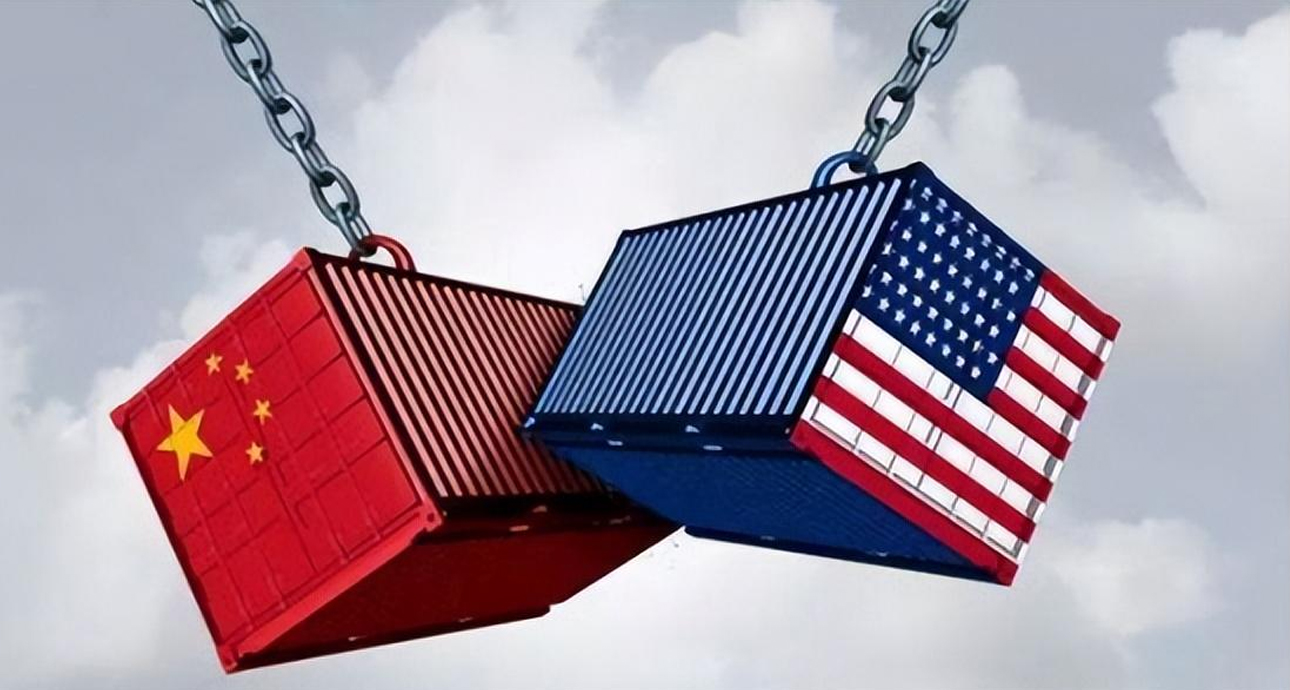
In the global economic landscape, the trade relationship between the United States and China stands as a cornerstone, exerting far - reaching influence on the world economy. As the two largest economies globally, their trade activities not only shape the economic fates of their own countries but also have a profound impact on international trade flows, global supply chains, and the overall stability of the world economic order.
The United States, with its highly developed consumer market and advanced technology - intensive industries, and China, known for its manufacturing prowess and large - scale production capabilities, have long been major trading partners. Over the years, the volume of goods and services exchanged between them has been staggering, with a wide range of products flowing across the Pacific, from Chinese - made consumer goods that fill American households to high - tech components and agricultural products exported from the US to China.
However, in recent times, the Sino - US trade situation has been in a state of flux, with various factors at play. Policy changes, geopolitical considerations, and market dynamics have all contributed to shifts in the volume, composition, and nature of their trade. This article delves deep into the latest Sino - US trade situation, aiming to provide readers with a comprehensive understanding of the current state, challenges, and potential future directions of this crucial trade relationship. Whether you are a businessperson involved in international trade, an economist interested in global economic trends, or simply a curious observer of international affairs, the insights presented here will offer valuable perspectives on one of the most significant economic relationships in the world today.
The Current Trade Figures
Overall Trade Volume
According to the latest data released by the General Administration of Customs of China, in the first four months of 2025, the total value of goods trade between China and the United States reached 1.44 trillion yuan. However, this figure represents a 2.1% year - on - year decline, accounting for 10.2% of China's total foreign trade value during this period. This downward trend in the overall trade volume reflects the complex and changing nature of the Sino - US trade relationship in the current global economic environment. The decline can be attributed to a variety of factors, including trade policies, the global economic slowdown, and the restructuring of global supply chains.
Export and Import Details
In the first four months of 2025, China's exports to the United States amounted to 1.07 trillion yuan, showing a year - on - year decrease of 1.5%. The slowdown in exports is influenced by multiple factors. On one hand, the continuous trade frictions between the two countries have led to the implementation of a series of tariff measures. These tariffs have increased the cost of Chinese products in the US market, reducing their price competitiveness. For example, the additional tariffs imposed by the US on a large number of Chinese - made consumer goods have made these products more expensive for American consumers, causing some to turn to alternative products from other countries. On the other hand, the global economic slowdown has also dampened the overall demand in the US market, further affecting China's exports.
During the same period, China's imports from the United States were valued at 369.95 billion yuan, a year - on - year decrease of 3.7%. The decline in imports is also due to a combination of reasons. The domestic economic situation in the US has affected the production and supply of some products, reducing their export capacity. Additionally, China's efforts to diversify its import sources and promote domestic substitution in some industries have also led to a decrease in the proportion of imports from the US. For instance, in the agricultural product market, China has increased imports from other countries such as Brazil, reducing its dependence on US agricultural products to a certain extent.
The Policy - driven Changes
Tariff Adjustments
The Geneva Economic and Trade Talks between China and the US have led to significant tariff adjustments, as clearly stated in the joint statement. The United States has committed to canceling a total of 91% of the additional tariffs imposed on Chinese goods. These canceled tariffs, which were a result of the 2025 Executive Orders on April 8th (No. 14259) and April 9th (No. 14266), had previously added a heavy burden to Chinese exports to the US. This cancellation covers a wide range of products, from daily consumer goods to industrial components, and is expected to greatly reduce the cost - pressure on Chinese exporters.
In addition, the US has modified the "reciprocal tariff" policy set on April 2nd (No. 14257). Among the 34% reciprocal tariffs, 24% will be suspended for an initial 90 - day period, while the remaining 10% will be retained. This means that for some products, the tariff rate will be temporarily reduced, providing a window of opportunity for businesses on both sides to adjust their trade strategies.
On the Chinese side, in response to the US actions, China has also taken corresponding measures. It has canceled 91% of the counter - retaliatory tariffs on US goods, mirroring the US's reduction in tariffs. For the 34% counter - retaliatory tariffs corresponding to the US "reciprocal tariffs", 24% will be suspended for 90 days, with the remaining 10% being retained. This reciprocal reduction in tariffs shows the intention of both sides to ease trade tensions and promote the resumption of normal trade relations. However, it should be noted that some tariffs on certain strategic and sensitive products from both sides will still be maintained, reflecting the complexity of the trade relationship and the consideration of national interests in key industries.
Policy - related Influences on Trade
These policy - driven tariff adjustments have far - reaching impacts on Sino - US trade. Firstly, they have a positive effect on market confidence. The significant reduction in tariffs signals to the market that the two largest economies in the world are willing to resolve trade disputes through dialogue and negotiation, rather than continuous trade frictions. This has led to a positive reaction in the global financial markets. For example, after the release of the joint statement, the stock markets in both China and the US showed upward trends. In China, the Shanghai Composite Index rose by 2.5% in the following trading days, and in the US, the S&P 500 index also increased by 1.8%, indicating that investors have regained confidence in the Sino - US trade relationship and the global economic outlook.
Secondly, these policies also influence corporate decision - making. For Chinese exporters, the reduced tariffs mean that their products can once again be more price - competitive in the US market. As a result, many export - oriented enterprises are considering expanding their production capacity. A leading Chinese electronics manufacturer, for instance, plans to increase its production of smart home devices by 30% in the next quarter to meet the expected increase in US market demand. On the other hand, US companies that import Chinese products can now purchase goods at a lower cost, which may lead to price reductions for consumers in the US and an increase in sales volume. Some US retailers are already in the process of restocking their shelves with Chinese - made products, hoping to take advantage of the new tariff situation.
In terms of industry development, different industries will be affected in various ways. The manufacturing industry in both countries is likely to experience changes. In China, the light manufacturing industry, such as the textile and toy industries, which rely heavily on exports to the US, may see a resurgence in growth. In the US, the technology - intensive industries that import a large number of components from China, like the semiconductor and electronics industries, may benefit from the reduced costs, which could accelerate their product R & D and innovation processes. However, the agricultural industry in the US may face some challenges. Although the tariff reduction may increase the export volume of some agricultural products to China, China's continuous efforts to diversify its agricultural import sources mean that the US agricultural products will still face intense competition from other countries in the Chinese market.
The Underlying Reasons for the Trade Situation
Economic Structure Discrepancies
The economic structures of China and the US are distinct, which has a profound impact on their trade relationship. China has long been known as the "world's factory", with a highly developed manufacturing industry. According to the World Bank, in 2024, China's manufacturing value - added accounted for approximately 27% of its GDP. This strong manufacturing base enables China to produce a vast array of products, from low - end consumer goods like textiles and toys to high - end industrial products such as 5G communication equipment and high - speed trains. The scale and efficiency of China's manufacturing industry are also remarkable. For example, in the electronics manufacturing industry, China can produce a large number of smartphones and laptops in a short period, meeting the global market demand.
On the other hand, the US economy is dominated by the service industry, which accounts for more than 80% of its GDP. The service sectors include finance, technology services, and entertainment. In the financial field, Wall Street in the US is the global financial center, with a large number of world - renowned financial institutions such as JPMorgan Chase and Goldman Sachs. These institutions play a crucial role in global capital flows and financial transactions. In the technology service industry, companies like Google, Amazon, and Microsoft are at the forefront of global technological innovation, providing various software services, cloud computing services, and artificial intelligence - related services.
The high - tech industry in the US also has unique advantages. It has a large number of top - tier research institutions and high - tech enterprises, with strong R & D capabilities. For instance, in the semiconductor field, companies like Intel and NVIDIA are leaders in chip technology research and development, occupying a significant share in the global high - end chip market. This difference in economic structure means that the two countries have different demands in trade. China exports a large number of manufactured goods to meet the consumer needs of the US market, while the US exports high - tech products, services, and agricultural products to China. However, due to the US's restrictions on the export of some high - tech products to China for various reasons, such as national security concerns, this has affected the balance and normal development of bilateral trade to a certain extent.
Global Supply Chain Restructuring
In recent years, global supply chains have been undergoing significant restructuring, which has had a major impact on Sino - US trade. The US has been promoting the reshoring of its manufacturing industry. Since the 2008 financial crisis, the US government has introduced a series of policies to encourage manufacturing enterprises to return to the US. For example, through tax incentives and subsidies, companies like Apple have started to increase domestic production in the US. In 2024, Apple announced the expansion of its domestic manufacturing capacity, aiming to produce a certain proportion of its products in the US, which has reduced its demand for imported products from China to some extent.
At the same time, the US is also promoting the "friend - shoring" and "near - shoring" strategies. It encourages companies to move their production bases to countries that are geographically close or have friendly relations with the US, such as Mexico and some Southeast Asian countries. Many US - based clothing brands have shifted their production lines from China to Vietnam and Bangladesh in recent years to reduce production costs and avoid trade risks. This has led to a decrease in the import volume of some products from China in the US market.
On the Chinese side, China is also actively promoting industrial upgrading. With the improvement of labor costs and the pursuit of high - quality development, Chinese enterprises are gradually moving up the global value chain. In the past, China's manufacturing industry was mainly concentrated in the low - end processing and assembly links. Now, many enterprises are increasing R & D investment, improving product quality and added value. For example, in the new energy vehicle industry, Chinese brands like BYD and NIO have made remarkable achievements. They not only meet the domestic market demand but also start to export to the international market, including the US. This industrial upgrading has changed the composition of China's exports to the US, with more high - value - added products being exported, which also requires the US to adjust its trade policies and market strategies accordingly.
In addition, the global supply chain restructuring is also affected by factors such as the COVID - 19 pandemic. The pandemic has exposed the vulnerability of the global supply chain, prompting countries to re - evaluate their supply chain security. Some countries have started to reduce their dependence on a single country in the supply chain, which has also contributed to the changes in Sino - US trade.
The Impact on Different Sectors
Manufacturing Industry
In the manufacturing industry, the Sino - US trade situation has both positive and negative impacts. On the positive side, some industries have seen growth opportunities. For example, in the field of electromechanical products, China's exports to the US have shown certain growth momentum. In the first four months of 2025, China's exports of electromechanical products to the US increased by 3.5% year - on - year. This is mainly due to China's continuous technological innovation and cost - effectiveness in the electromechanical industry. Many Chinese - made high - quality electromechanical products, such as smart home appliances and industrial machinery, are highly competitive in the US market.
Another emerging area is new energy vehicle components. With the global trend towards new energy vehicles, China has made remarkable achievements in the research and development and production of new energy vehicle components. In 2024, the export value of China's new energy vehicle components to the US reached $5.6 billion, an increase of 15% compared to the previous year. Chinese - made batteries, electric motors, and vehicle control systems are favored by US new energy vehicle manufacturers for their high - performance and cost - effectiveness, which has promoted the growth of China's exports in this area.
However, the manufacturing industry also faces challenges. The trade frictions in the past have led to increased costs for some manufacturing enterprises. Although the recent tariff reduction haseased some of the cost - pressure, uncertainties still remain. The continuous global supply chain restructuring means that Chinese manufacturing enterprises need to constantly adapt to changes in market demand and competition patterns. For example, the shift of some low - end manufacturing orders to Southeast Asian countries due to "near - shoring" and "friend - shoring" strategies requires Chinese manufacturers to further enhance their competitiveness in high - value - added manufacturing. Moreover, the US's potential future policy changes and geopolitical considerations may still pose threats to the long - term stability of Chinese manufacturing exports to the US.
www.chbcooling.com
Your Cooling System Expert Next Door freightliner aftermarket radiator /freightliner coronado radiator/aluminum intercooler manufacturer
Car AC Maintenance: Beat the Heat with These Essential Tips
